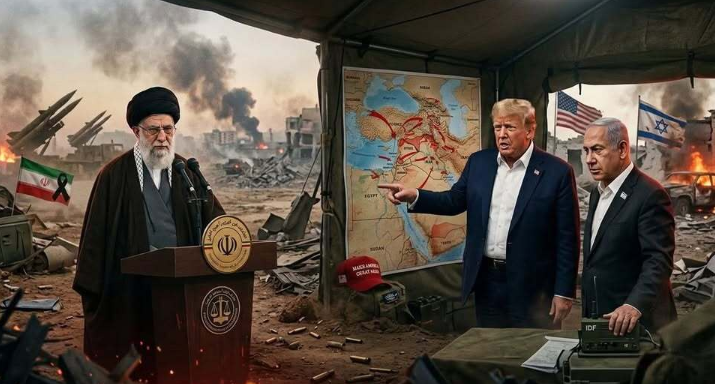

Headlines like “Urgent  Iran will strike America tonight and start with the state of…” spread rapidly across social media. They are designed to trigger fear, curiosity, and urgency so that people click, share, and comment. But when you look at verified information from major news outlets and government statements, the situation is far more complex—and far less dramatic than these viral posts claim.
According to recent reporting, U.S. officials said that alerts about a possible Iranian retaliation were based only on an unverified tip, and authorities emphasized there was no credible threat to the U.S. homeland at the time.
At the same time, analysts warn that misinformation related to tensions between the United States and Iran has been spreading widely online, often exaggerating events or inventing scenarios that are not supported by intelligence or official announcements.
Below is a deeper look at why posts like this appear online, what the real geopolitical situation is, and why people should be cautious before believing dramatic “breaking news” claims.
Why Viral “War Alerts” Spread So Quickly
In the digital age, information moves faster than ever. Platforms reward posts that generate strong emotional reactions. Fear is one of the most powerful emotions, so headlines about war or attacks often spread extremely quickly.
A typical viral post follows a formula:
-
A shocking claim (“Iran will strike tonight”)
-
A sense of urgency (“Urgent
”) -
A cliffhanger (“starting with the state of…”)
-
A prompt to click (“See more”)
These posts are often created not by journalists but by content farms or social media pages that profit from engagement. The more people click or share, the more the page grows.
This is why many viral “breaking news” stories turn out to be misleading or completely fabricated.
The Real Background: Rising Tensions
That doesn’t mean tensions between the United States and Iran are imaginary. In fact, the geopolitical situation in the Middle East has been extremely tense.
In early 2026, a major conflict escalated after joint military strikes by the United States and Israel targeted Iranian facilities. This escalation led to retaliatory actions by Iran in several parts of the Middle East.
Those retaliatory attacks mainly targeted military bases and regional targets, not the U.S. mainland.
For example:
-
Iranian missile and drone strikes targeted locations in the Middle East where U.S. forces are present.
-
Some attacks also affected facilities connected to the U.S. Navy in the Persian Gulf region.
These incidents show that the conflict is serious—but they are very different from the viral claim that Iran is about to attack American states directly.
Why an Attack on the U.S. Mainland Is Unlikely
Military experts point out that a direct attack on the United States mainland would be an extremely risky move for any country.
Several factors make it unlikely:
1. Distance and logistics
The United States is thousands of miles away from Iran. Launching missiles or military operations across that distance would require capabilities that are extremely difficult to conceal.
2. Defense systems
The U.S. has one of the most advanced missile defense and surveillance systems in the world. Any large-scale attack would almost certainly be detected early.
3. Massive retaliation risk
A direct attack on the U.S. mainland would likely trigger overwhelming military retaliation.
Because of this, most modern conflicts involving Iran and the United States occur through:
-
regional proxy forces
-
cyberattacks
-
strikes on bases in the Middle East
-
political or economic pressure
rather than direct attacks on American cities.
The Role of Cyber and Information Warfare
Another important factor in modern conflicts is the digital battlefield.
During the ongoing tensions surrounding the 2026 Iran war, both sides have used cyber operations and information campaigns.
These operations can include:
-
hacking attempts
-
misinformation campaigns
-
propaganda on social media
-
psychological operations
This environment makes it easier for rumors to spread and harder for the public to know what information is reliable.
Why Fake “Breaking News” Can Be Dangerous
Even though many viral posts are fake, they can still have real consequences.
False reports about war or attacks can:
-
cause public panic
-
spread misinformation quickly
-
damage trust in real journalism
-
overwhelm emergency systems
In some countries, authorities have even warned that spreading false war rumors online can lead to legal consequences because of the panic they create.
How to Recognize Fake War Headlines
If you see posts claiming that a country will attack “tonight” or “within hours,” look for these warning signs.
1. No credible sources
Real breaking news will appear on major outlets such as international news agencies or government statements.
2. Dramatic language
Words like “URGENT,” “WORLD WAR,” or “MUST LEAVE NOW” are often used in clickbait.
3. Missing details
Posts often hide the key information behind “See more…” because the claim itself is weak or unsupported.
4. Unknown pages
Many viral posts come from pages that repeatedly share sensational or misleading content.
What Authorities Actually Say
When rumors about Iranian retaliation spread recently, officials clarified that the alert was based on a single unverified tip and that there was no confirmed imminent threat to the United States.
Law enforcement agencies still monitor potential threats carefully, but that is part of normal security procedures during international tensions.
Staying Calm in a World of Fast News
Global politics can change quickly, and international tensions sometimes create real risks. But viral posts on social media often exaggerate those risks or invent scenarios that are not happening.
The best way to stay informed is to rely on verified information from trusted news organizations rather than sensational posts designed to go viral.
When you see a headline claiming that war will begin “tonight,” the safest reaction is not panic—it is skepticism.
 Bottom line:
There is currently no confirmed report that Iran plans to attack the United States tonight or target any specific U.S. state. Many posts making that claim are part of viral misinformation spreading online.