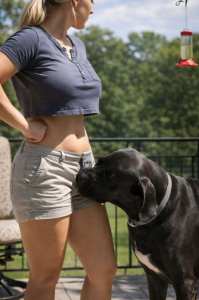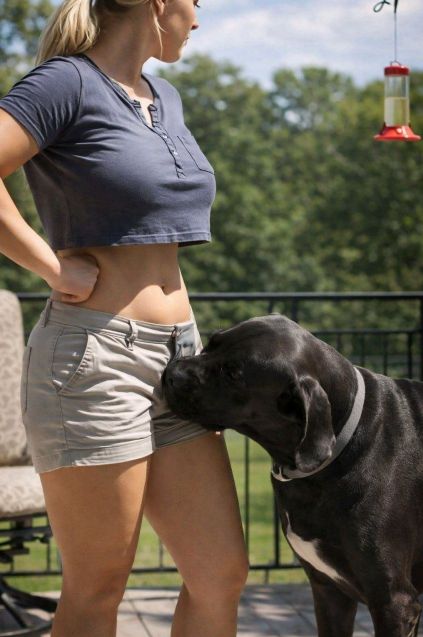

You may have seen claims like this circulating online—suggesting that when a dog sniffs a person’s private areas, it “means” something specific about that person’s health, behavior, or body. That idea is misleading. The real explanation is much simpler, grounded in how dogs experience the world.
When a dog sniffs a person’s groin or rear area, it’s not making a judgment or detecting anything scandalous. It’s simply gathering information. These areas of the human body contain apocrine sweat glands, which produce a stronger, more complex scent than other parts of the body. Dogs are naturally drawn to these scent-rich regions because they provide more data—almost like a detailed profile.
When your dog approaches a human and does something similar, it’s not behaving inappropriately in its own mind. It’s simply applying its natural instincts to a different kind of social interaction. Humans don’t communicate this way, of course, but dogs don’t automatically understand human social norms unless they are trained.
Dogs may also be attracted to familiar or comforting smells. If a person smells like their owner, another animal, or even food, the dog may investigate more closely. Laundry detergents, lotions, or perfumes can also play a role—some scents simply pique a dog’s curiosity.
It’s important to note that this behavior does not indicate anything negative or embarrassing about a person. It doesn’t mean someone is “unclean” or has a problem. It’s purely about scent and the dog’s instinctive way of exploring the world.
That said, while the behavior is normal for dogs, it can be uncomfortable or awkward for people. Fortunately, it can be managed with training. Dogs can learn boundaries, just like they learn not to jump on guests or beg at the table.
One of the most effective ways to address this is through basic obedience training. Teaching commands like “sit,” “stay,” or “leave it” gives you tools to redirect your dog’s behavior. When your dog approaches someone inappropriately, you can calmly give a command and reward them for complying. Over time, the dog learns that polite behavior earns positive reinforcement.
Socialization is also key. Dogs that are regularly exposed to different people and environments are more likely to develop appropriate manners. They learn that while curiosity is natural, there are limits to acceptable behavior in human settings.
If your dog tends to do this frequently, it might also help to manage greetings more proactively. For example, when guests arrive, you can keep your dog on a leash initially or have them sit and wait before approaching. This creates a structured interaction and reduces the likelihood of awkward moments.
Another factor to consider is energy levels. Dogs with excess energy may be more impulsive and less controlled in their behavior. Ensuring your dog gets enough physical exercise and mental stimulation can make a big difference. A well-exercised dog is generally calmer and more responsive to commands.
In some cases, dogs may be particularly drawn to certain individuals. This doesn’t mean anything is “wrong” with that person. It could simply be that their scent is more noticeable or interesting to the dog for any number of harmless reasons. Each person’s body chemistry is unique, and dogs pick up on those subtle differences.
There are also myths that dogs can detect diseases or medical conditions through smell. While it’s true that some trained service dogs can be taught to detect specific conditions—such as low blood sugar or certain types of cancer—this requires specialized training. An untrained dog sniffing someone is not diagnosing anything. It’s just exploring.
Understanding your dog’s perspective can help reduce embarrassment and frustration. What seems strange or inappropriate to us is completely normal to them. They’re not trying to be rude—they’re just being dogs.
If you’re ever concerned about your dog’s behavior, consulting a professional dog trainer or veterinarian can provide guidance tailored to your situation. They can help you develop strategies to manage and modify the behavior effectively.
In summary, when a dog sniffs a person’s private area, it doesn’t mean the person “has” anything unusual or noteworthy. It simply reflects the dog’s reliance on scent as its primary way of understanding the world. By recognizing this and providing proper training, you can ensure comfortable and respectful interactions between your dog and others.